


Mar 2014
Why the CRI – Color Rendering Index – Is Important For You
Technical Explanation: The CRI is a unit that measures the ability of a light source to reproduce the colors of objects faithfully in comparison with an ideal source of light, or natural sources such as sunlight. The CRI is a determined value from 0 to 100, with 100 being the value “perfect” or daylight.
Real World Explanation: The CRI determines how you and your surroundings appear to you and the other people in your environment.

Mar 2014
Current Trends in the Lighting Industry

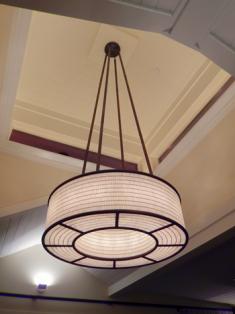
Here is an example of what is happening in the the world of lighting today and what will continue to happen in the foreseeable future. LED’s are all the rage and designers are finding all sorts of new ways to incorporate them into light fixtures. The reasons are clear: LED’s consume far less energy than incandescent light bulbs, LED’s are cool to the touch, LED’s have better color temperature than they did in the past, LED’s have a super long life, and LED’s are small so fixture design can be very creative. In addition to LED fixtures like this one, LED light bulb design is evolving very quickly also. Technicians are finding ways to make them more attractive and more like the good old fashioned incandescent light bulbs. Some of the new LED light bulbs even grow warmer in color temperature as they are dimmed, just like incandescent light bulbs do. Additionally, new, more efficient heat sink materials are being developed which allow LED light bulbs be more streamlined and closer in appearance to both A-lamps and candelabra bulbs. Pretty soon you will be able to use LED bulbs in chandeliers and not notice a difference between them and the candelabra bulbs they replace. Best of all, LED’s are becoming less expensive all the time as manufacturing becomes more efficient and more manufacturers enter the marketplace. As with anything though, I urge you to be careful when buying any LED product as there still are huge quality differences among the myriad of products and producers out there. Try to see the product before you buy it to make sure the color of the light is acceptable to you. I recommend buying dimmable LED light bulbs and fixtures – some LED’s are not dimmable. I also recommend caution in using dedicated LED recessed lighting fixtures. Once you install them they are in the ceiling a long time and the quality of the light might not be satisfactory for you. Instead, consider buying a regular recessed fixture and using an LED light bulb. That way you are not locked in. Please visit our website www.fogglighting.com and like us on Facebook. You also might be interested in the Underwriter’s Laboratory app, LightSmart, which can be downloaded from the App Store. It has all kinds of great information about lighting…and its free.
Mar 2014
Light for Better Sleep

Re-Printed From Residential Lighting Magazine November 2013 Issue
A Lighting Research Center study on lighting systems for Alzheimer’s patients could help an aging population.
Residential Lighting: Tell us how light levels affect circadian rhythms. (more…)
Dec 2013
Residential Lighting by the Numbers
The following is a re-print of an ALA Technology Newsletter that was written by Terry McGowan at the ALA. It contains some interesting facts about current lighting usage and future trends.
- In U.S. residences, the average daily use per bulb is 1.6 hours.
- The average bulb uses 47.7 watts. (That’s down substantially from the 67 watt average reported in the 2002 report.)
- There are more than 67 bulbs in the average home considering all home types (single family, multi-family, etc.); but single family homes average more than 85 bulbs/home. (The average reported in the 2002 report was 37 bulbs/home.)
- Household lighting energy use varies substantially by region but averages
- 1,700 kWh/home per year. New York and California use the least averaging
- Less than 1,500 kWh while states including Montana, Wyoming, Arizona and Missouri used the most averaging over 2,100 kWh per home annually.
- The cost of energy used for residential lighting also varies by region, but total home lighting energy costs range from $200-300 per year.
- Bulbs in bedrooms, bathrooms, living rooms and kitchens consume the most lighting energy in the average home.
- Dimmers control only 4% of the bulbs in the average home and almost 80% of those bulbs are in ceiling fixtures.
- Incandescent bulbs (2010 data) remain the most widely used light source in homes (They are in more than 62% of the sockets); but the use of CFLs and LED bulbs has increased with CFLs at slightly more than 20% of the socketson average (also 2010 data).
- What the 2010-2012 report shows is that the conversion of residential sockets from standard incandescent to halogen incandescent, CFL or LED bulbs has rapidly increased over this last two-year period.
- Some of that increase is due, of course, to the phase-out of standard incandescent bulbs; but lower prices for CFL and LED bulbs, better bulb performance, more product choice and market activities such as rebates and the entry of new manufacturers into the market have all played a role as well.
- Of the “A-line” bulb sockets, 62% of the 3.2 billion in homes contained standard incandescent bulbs in 2010. That number has now dropped to 55%.
- But, LED bulbs, even though some 20 million have been installed over the last two years, still fill less than 1% of the total available sockets.
- The next two years, however, will likely see a dramatic change in those numbers because of the phase-out of the standard 40 watt and 60 watt bulbs beginning on January 1, 2014. Those two bulb types represent almost 60% of the standard bulb market.
Nov 2013
Why Is There A Fire Risk If I Use More Than The MAX Watts On My Light Bulb Socket Label?

Most lamps sold today have a label similar to the one pictured here.Why, might you ask, is there a fire risk if you use a higher watt light bulb than the one listed? The reason is because higher watts equates to higher temperatures. A watt is a unit of heat and is the amount of energy a light bulb uses. A watt is not to be confused with a lumen which is the measure of light output.
Lampshades confine a certain amount of heat depending on the diameter of the top opening. The smaller the opening, the smaller wattage light bulb should be used. Metal lampshades get hot themselves, sometimes too hot to touch. Sockets are made in lots of different quality levels and can get really hot also. The components of a light fixture all work together is a certain way. Whatever you do, pay attention to the label and use the proper incandescent light bulb.
All that being said however, CFL’s do not generate much heat at all so you can use a higher wattage equivalent CFL to produce more lumens than a lower wattage incandescent light bulb. For example, a 13 watt CFL produces about the same amount of light as a 75 watt incandescent light bulb so you could use it in a fixture that limits the watts to 40. Just don’t mess around with incandescent light bulbs, they can really be a fire hazard!
Download the UL app, LightSmart, from the app store for all kinds of lighting information and visit FoggLighting.com.
Oct 2013
Lighting and Color – Why Color Rendering Index is Important
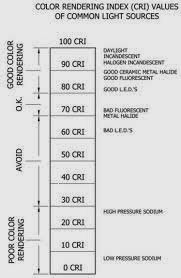
Now that regular incandescent light bulbs are a thing of the past and LED’s and CFL’s are the new “go to” light bulbs, what can you expect your house to look like? The reason I am asking this question is because the colors in your home are going to appear differently than they do under good, old fashioned incandescent lighting. This is because of something know as CRI or Color Rendering Index, a scale of 0-100 where incandescent light bulbs are at the top of scale, 100.


Oct 2013
Sizing Light Fixtures

| I am often asked about the proper size of a lighting fixture so when I saw this article in “Residential Lighting” magazine I decided to share it with you. Randall Whitehead is a regular contributor to the magazine.
Helpful advice for calculating proportional decorative lighting based on a room’s dimensions.
By: Randall Whitehead, IALD
Q: What is the rule of thumb for determining the size of a chandelier or pendant fixture for a given space? I have a 25-by-30-foot area over a stairwell and I don’t want too large or too small a fixture. If you could help me out, it would make me very happy.
A: Just think of me as verbal Prozac. Try this formula: Add the dimensions of the width and length of the foyer area together. This number will be the measurement in inches what the width of your fixture should be. Based on the dimensions that you have given me, I think you should be looking at a chandelier that is 55 inches in diameter. The length will be a little bit harder to determine, as it depends on the ceiling height. Taller ceilings can take longer fixtures. Somebody in your family or your contractor could make a mock-up out of wooden dowels and strings to get a feel for what the fixture would look like in the space. Randall Whitehead, IALD, is a professional lighting designer and author. His books include “Residential Lighting, A Practical Guide.” Whitehead has worked on projects worldwide, appeared on the Discovery Channel, HGTV and CNN, and he is regular guest on Martha Stewart Living Radio. Visit his website www.randallwhitehead.comand follow his blog www.lightmakesright.comfor more information on books, upcoming seminars and the latest lighting trends.
Please visit www.fogglighting.com and like us on Face Book. Be sure to download the free UL app, “LightSmart” from the app store for lots of good lighting information.
|
||||
|
|
||||

Oct 2013
LED Technology is Becoming Mainstream
The following story appeared in the Wall Street Journal on Saturday, September 28. I pass this along to you because it is an example of how LED technology is becoming more popular.
Where LED Leads, Design Will Follow
Smaller, cooler and increasingly programmable, LEDs are making possible some startling tricks of the light—from glowing wallpaper to hackable chandeliers
- By
- MICHAEL HSU
Sep 2013
Things to Consider When Buying Exterior Lighting Fixtures

Your outdoor lighting fixtures are one of the first thing people notice when they look at your house. The fixtures set the tone and say a lot about the home owners. There are many, many different types, styles, sizes and quality levels of exterior lights so you should learn some of the basics before buying.
 |
| Hubbardton Forge Exterior Fixture (I have several of these on my house) |
Size – This is an important consideration that many buyers overlook in their purchasing decision. A fixture on display in a lighting store may look large in the store but when mounted on the side of a house may look really too small. So before buying a fixture I recommend that you make a model of the fixture by cutting out a piece of paper or cardboard the size of the fixture and pinning it to your house. Then go down the driveway to the street and look at your house from a distance. How does the fixture look? Too big, too small or just right?
Glare – My biggest gripe with most exterior lighting is the amount of glare it produces. A prime example are the flood lights that many people mount to the garage that come on when somebody drives into the yard. How does that help you see anything! The glare of the lights blinds you so you can not see anything until your pupils dilate again. You do not need much light outside when it is dark; it is the contrast produced by a little light that helps you see, think of the moon. (Also, the neighbors might not like the light pollution produced by glarey exterior fixtures). So I recommend you buy fixtures that do not produce glare and use frosted light bulbs.
Quality – There is no question that good quality is more expensive than poor quality, but good quality is
 |
| Dark Sky Fixture |
usually a better value and it shows! If you plan to live in your house for a while buy a better fixture once rather than a cheap fixture twice or three times, especially if you live in a harsh climate, like almost everywhere. Salt air, ice, wind, excessive sun and heat are all tough on an exterior fixture. Better quality is usually noticeable also.
Dark Sky – These fixtures are being mandated in a lot of communities for good reason, they contain the light and prevent it from spilling over and causing light pollution. This is especially important in sensitive areas where the night sky is still visible. They provide security and safety and do not allow light to escape into the night sky. I am a big advocate for dark sky fixtures for lots of reasons, no light pollution and no glare to name two.
Style – Style is purely a matter of personal taste. Styles range from Colonial America to Mission to Ultra Modern and everything in between. Chose what you feel looks good on your house. It is your house after all. There are all sorts of different finishes available too. So, for example, you can see the same fixture in a dark brass, raw copper, antique brass, green verdigris, raw brass or mission brown finish. They all might look great, but pick the one that you think will look best on your house.
Exterior lighting is important for safety and security, and it also enhances the appearance of you house. Visit an independent lighting showroom for the best quality and design options. Visit us at www.fogglighting.com and like us on Face Book. Be sure to download the UL app, “LightSmart” from the app store for all kinds of useful information about lighting.
Sep 2013
Lighting Makes All the Difference When Buying Clothing!

How many times have you used a dressing room in a clothing store to try on a garment before making a purchase? Lots of times, right. How many times have you gone into the dressing room and said to yourself: “Wow, this dress really looks great.”? Chances are that when you were “wowed” it is because the lighting was great – the lighting fixtures were placed appropriately, the color temperature of the light bulbs was flattering, and the color rendering index of the light bulbs was close to 100.
|
| Well Lighted, Comfortable Retail Dressing Room |
It is amazing what a difference lighting makes in how you look! Great lighting makes you look like a million bucks. Poor lighting washes out your complexion, distorts the color of your clothing and adds unflattering shadows on your face.
Why then would a retail establishment, trying to sell clothing, not invest what it takes to make their dressing rooms the best they can be?
To quote from an April 6, 2011 article from the Wall Street Journal entitled “Why Are Fitting Rooms So Awful”: “Lighting is a critical component. “Any woman who goes into a fitting room that has really bad lighting, you look at yourself, you look at your skin and you’re completely distracted,” says Anthropologie’s Ms. McDevitt. “Then you lose the real reason why you were in there.”
The new Ann Taylor rooms have six sources of lighting and three types of bulbs, compared to one source and type of lighting in the old design. The mixture of ceramic metal halide, compact fluorescent and low-voltage bulbs is more flattering, Ms. Dorfman says.
Bloomingdale’s has installed rear-lit three-way mirrors, which allow customers to see themselves from a variety of angles. There is also a ceiling-mounted light three feet back from the mirror to eliminate shadows on the shopper’s face, says Jack Hruska, executive vice president of creative services at Bloomingdale’s.”
Please visit us at www.fogglighting.com, like us on Face Book and call with all your lighting questions. I like helping homeowners and business owners achieve optimum lighting. Download the free UL app “LightSmart” from the App Store for all kinds of useful lighting information.