


Sep 2013
Interesting Lighting Facts
|
Re-Printed from the September 2013 ALA Technology Newsletter
Residential Lighting By The Numbers
|
|
Reliable data about the energy use of lighting products, together with numbers about the types and the quantity of products sold into the residential market, has become an increasingly important part of ALA activities in recent years. I pay particular attention to lighting energy data and the mix of light source products in various lighting applications. Those numbers indicate market trends and information about the technology being used. Demographic numbers are a good predictor of market activity too. An example is the market for elderly-friendly lighting which is growing because every day more than 11,000 people reach 65 years of age in the U.S.
Starting in 2002, the U.S. Department of Energy began publishing detailed lighting inventory and energy consumption data by sector – residential, commercial, industrial and outdoor. An update was published in 2012 based upon 2010 data, but last December, for the first time, residential lighting energy use was examined in detail.
Report Results fromResidential Lighting End-Use Consumption Study: Estimation Framework and Initial Estimates
(Download at no charge, here: http://alturl.com/qg bh2)
Since the 2010 data above didn’t include the rapid growth in the use of LED bulbs during the past couple of years, I looked at another DOE report which uses the same database, but which analyzed the LED adoption rate over the 2010-2012 time period.
Adoption of Light-Emitting Diodes in Common Lighting Applications.
(You can find that report at http://alturl.com/7z6yd)
The big question is: What will consumers put into those sockets as the conventional bulbs are replaced? The answer to that question will make 2014-15 an unusual and interesting time in the lighting business.
What are you going to put in your sockets? That’s the question that you have to answer for yourself. Please visit us at www.fogglighting.com and like us on Face Book. Be sure to download the UL app, LightSmart, for all kinds of interesting lighting information.
|
Sep 2013
What to Look For in a Ceiling Fan
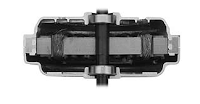
When buying a ceiling fan there are several factors that should be examined before making a purchase. A ceiling fan is basically a motor with blades suspended from a ceiling. Pretty straightforward yet there are huge quality differences that can impact you and the comfort of your home.
 |
| Die Cast Motor |
Putting aside all style considerations, motor size, AC or DC motor, blade pitch, blade arms and mounting hardware are the factors you should familiarize yourself with before buying a fan because these are the factors that determine the airflow, measured as CFM, the efficiency and the quiet operation of a ceiling fan.
Motor size is measured in millimeters. A small motor might be 144 x 10mn whereas a large motor might be 188 x 22mn. Blade pitch should be at least 14 degrees. Blade arms should be sturdy metal, strong enough to accommodate the blades. A DC motor is more efficient that an AC motor, but it is more expensive to purchase initially. Look carefully at all the specifications before making a purchase. You will have the fan running most of the time so you will want it to be quiet and capable of moving air.
Please visit us at www.fogglighting.com, like us on Face Book and come see us for expert help for all your lighting and ceiling fan requirements.
Sep 2013
Three Essential Types of Lighting
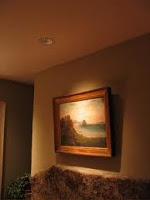
Three essential types of lighting are Ambient, Task and Accent, sometimes called the triple crown of interior illumination.
 |
| Good Source of Ambient Light |
Ambient Lighting, also called general or overall lighting, provides the light necessary for safe and effective interior illumination, allowing hazard-free navigation of the interior space with minimal shadows. Usually a ceiling fixture meets the requirements of good ambient lighting. To determine a room’s ambient lighting requirement multiply the room’s square footage by 1.5 to get the minimum number of incandescent watts necessary. You can then translate those watts into fluorescent or LED wattage equivalents if you like. Ambient is only the base layer in a well designed lighting plan which also could include wall sconces, floor lamps, recessed lights or picture lights.
Task lighting focuses light on tasks that are performed in a given room. It is a layer of light that should be used in addition to, not in place of, ambient and accent lighting. In most homes, kitchens, laundries and bathrooms require the most task lighting. But the requirement of these three room require different types of task lighting. Kitchens need recessed lighting in the ceiling aligned with the front edge of the lower cabinets in addition to under cabinet lighting and some kind of ceiling fixture and/or pendants. Bathrooms need wall sconces on either side of vanities for optimal light for makeup application and shaving. And laundries need bright ambient light to facilitate separating colors and to provide light for ironing and folding.
 |
| Example of Accent Lighting |
Accent lighting is used to light art, sculpture or interesting architectural features like stone fireplaces. It is the layer of light that gives a room “texture” and interest and dimension. It lets you focus on the interesting features that are in the room. Some people think that accent light should be up to three times brighter than surrounding ambient light. I do not necessarily agree with this thought. I think accent light should not distract, but rather enhance, the ambiance of the room. Wall sconces, picture lights and directional recessed lights can all be used as accent lighting.
And remember, use dimmers on every light in the house. They cost a little more than switches, but they allow so much greater control over the lighting that they can really make a lighting plan “pop”. Please visit us at www.fogglighting.com, like us on Face Book and call with all your lighting questions and needs. We help people light up their lives!
Sep 2013
Lighting and the Visual Environment for Senior Living.
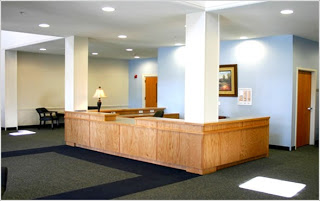
Generally, the visual requirements for senior citizens are different than for the younger generation because of changes in the eye and in the visual nervous system. With age, the pupil becomes smaller thus reducing the amount of light that can enter the eye, the lens becomes yellowed thereby scattering light, reducing contrast and reducing the ability to focus, and ocular disease is more prevalent in older people. All these factors contribute to the special lighting needs of the senior population.
 |
| Great Lighting for Older Eyes! |
To quote the IES publication “Lighting and the Visual Environment for Senior Living“, “In a study conducted by Sorensen and Brunnstrom in private homes in Sweden, a direct correlation was discovered between “good” illumination in an older person’s residence and that person’s quality of life. The study defined good illumination as: a sufficient quantity of light, appropriate direction of the light, good contrast, and light that does not cause glare. Physical condition, appetite, general good health, and self-confidence improved with good quality lighting. In addition loneliness, anxiety, and temper were diminished.”
 |
| Bad Senior Lighting – Glare, Poor Contrast and Bad Direction of Light. |
To go on quoting from the same article, “Poor lighting is associated with falls among the elderly. Investment in proper lighting is an excellent means of reducing health care costs and maintaining an independent life style…Good lighting should be viewed as prevention, and must receive priority attention by all retirement complexes, long-term care facilities, seniors living at home, and the community at large. Optimum light exposure ought to be as uncontroversial an aim of future health policy as best possible nutrition.”
Unfortunately, in my limited experience with two elderly parents and a parent-in-law, lighting in elderly residences is far from “optimal”. It was more like the photo on the right with lots of glare and poor contrast. Shiny floors and overhead bright recessed lights cause glare both from above and from the reflection of the light on the floor. Hospitals are the same way. And unfortunately the lighting in most homes is installed by the electrician or contractor without regard to proper lighting techniques (for any age group). A well lighted space will be a well lighted space for any age…it is timeless. Plan ahead when lighting your new home or renovation. A good lighting plan will pay you dividends forever.
Please visit us at www.fogglighting.com and like us on Facebook. Also, download the UL app “LightSmart” which has lots of good lighting recommendations. Call me at 207-797-7568 for your lighting needs.
Aug 2013
Labor Day Weekend – You Know What That Means!
Well Labor Day Weekend is here already. Wow, summer did not last very long (unless you are a Mom with young school aged kids). Next comes fall, a great time of year for the lighting business because as it gets dark earlier and earlier, people discover that they need more lights. My advice, beat the crowds, buy your lights now. Be prepared!
 |
| Great Lighting Solution! |
A floor lamp like the one pictured here is a great solution for a dark corner. This lamp has a center socket that will take a 50/100/150 3-way light bulb plus three sockets, on small arms around the central socket, that each take 60 watt light bulbs. That is a lot of light. Enough light for reading, sewing or playing card games. And, a light like this is an economical solution, costing only a couple of hundred dollars.
This time of year also means back-to-school. And back-to-school means homework. Students need good lighting for their homework which means a desk lamp like the one pictured on the right. This is an LED super adjustable, dimmable model that is available in black, orange and stainless steel. It can mount as shown or on a plate that attaches to a desk or a wall. Guaranteed for 5 years this lamps is a good value for about $250.
Please visit us a www.fogglighting.com and like us on Face Book. Remember, good lighting is important for your state of mind. Call with all your lighting questions and needs.
Aug 2013
What Do I Think About LED?
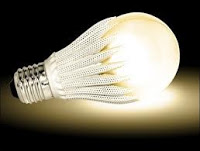
I get asked this question almost every day, and every day I have the same answer: “Don’t get locked into a technology that is changing daily.” By this I mean, use LED replacement light bulbs, but do not buy fixtures with dedicated LED modules already built in. The LED dedicated fixtures are much more expensive than conventional fixtures, and you will be stuck with them when a much more advanced LED option becomes available in a few months or a year. The exception to this rule is in the use of under cabinet or cove lighting where LED tape light and other LED fixtures have been proven to be good alternatives (albeit more expensive).

The Light bulb pictured here on the left is a technological breakthrough. This light bulb is manufactured by Soraa, the most advanced LED MR16 manufacturer in the world. This MR16 can be used in any fixture that uses MR16’s. It is dimmable, comes in various color temperatures and is available with a variety of lenses, filters and louvers which control beam spread and glare. Not all replacement bulbs are created equal. This is one of the best. It costs a little more than it’s cheaper rivals, but the results are noticeable.

The light bulb pictured on the right is an LED replacement bulb for a standard incandescent light bulb. Notice the “fingers” that extend up from the socket to the base of the globe. These “fingers” are made from a material that will draw heat away from the solid state components in the light bulb. (LED’s generate heat because of the resistance in the solid state components – much like a computer).
This brings me to crux of the LED dilemma – until scientists can find much more efficient heat sink materials than are available today, LED’s are stuck in limbo. The greater the lumen output, the more heat is generated and this heat must be dissipated. This breakthrough will come fairly soon, and when it does, there will be a flood of new products.
Please visit us at www.fogglighting.com and like us on Facebook. Also check out the app “LightSmart” from UL which has tons of great information about lighting. Need lighting help, call Fogg Lighting at 207-797-7568.
Aug 2013
Trouble Falling Asleep at Night?

Do you or your kids have trouble falling asleep at night? It could be that you need less exposure to cool blue light, like the predominate light given off by TV’s and computer screens, and more exposure to warm red light, like incandescent light bulbs or evening sunsets. This is because blue light interferes with melatonin production and red light encourages melatonin production. Melatonin is a hormone that helps regulate the sleep-wake cycle by chemically causing drowsiness and lowering body temperature.
 |
| Night, Night |
Circadian rhythms are tied to sunrise and sunset and have controlled the rhythm of life ever since life began on the planet. Before electricity, humans went to bed when it got dark and woke up when it became light again. The predominate light in the evening for those generations was either natural sunlight or the predominately red light of a fire or torch. Therefore we have evolved to want to sleep when the sun goes down.
Please visit us at www.fogglighting.com and like us on Facebook. Download the UL app, “LightSmart” for lots of good information and call me at 207-797-7568 for all your lighting needs.
Aug 2013
Lighting Your Kitchen – A Focal Point in Today’s Home
While cooking and cleaning functions endure, kitchens are hubs of activity in homes today. I know that when we entertain guests at our house we cannot get them out of the kitchen. We entertain, eat, prepare food, wash dishes and even read in our kitchens. That is why kitchens require several layers of light to serve all the needs of the modern home.
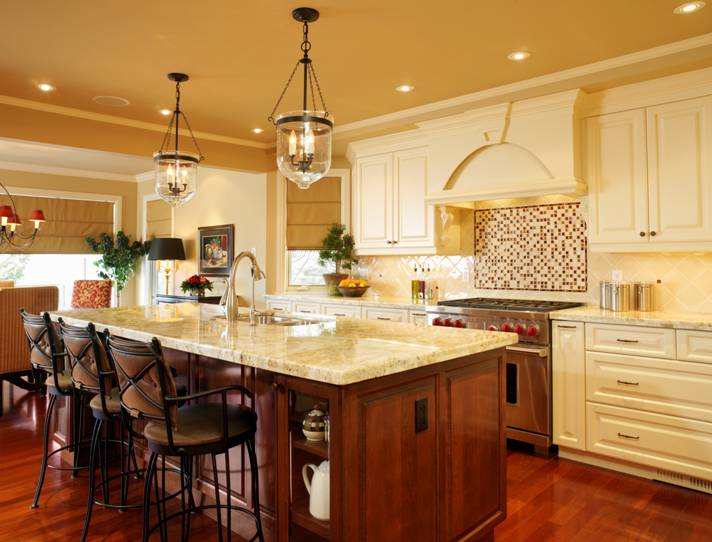 |
| Lots of Layers of Light |
Please note the different layers of light in this kitchen. There are pendants over the island, recessed lights over the counters, under cabinet lights (also lighting the counters), range hood lights, picture lights, a chandelier over the kitchen table and even a table lamp! That is seven layers of light! And how good does it look, and how pleasurable it would be to entertain in this space. Cooking would even be more enjoyable. (Of course I love to cook so I would love having a kitchen like this).
You do not need to have a magnificent home to have good lighting in your kitchen. If you choose correct lighting for your space it will look great and allow you to perform all the kitchen tasks. Really good recessed lights are quite affordable and should be used over the counter tops, not behind them. Island counters require good lighting. Multiply the square footage of the counter top by 2.5 to determine how many watts of incandescent light is needed. Then select fixtures (usually pendants) that can deliver that amount of light, or augment those fixtures with additional recessed lights spaced between the fixtures. Most families spend a lot of time the their kitchens so make it a priority to light your kitchen well.
Please visit us at www.fogglighting.com and like us on Face Book. I am always available for consultations on proper lighting for your home, and my design team can help you find fixtures that are beautiful and affordable.
Aug 2013
"THE FUTURE IS (ALMOST) NOW: IS THE LED LIGHT MAINSTREAM?"
I have borrowed some quotes from the above mentioned article that appeared in “enLIGHTenment” magazine’s July, 2013 issue written by Ted Konnerth, CEO of Egret Consulting Group. A lot of this article is technical so I have selected passages that pertain to consumers.
“Given the recent attention our industry has paid to solid-state lighting, I am sure it is hard for you to believe that fluorescent, high intensity discharge (HID), and incandescent products still represent 85 percent of all lighting sales. I’ve attended and led innumerable discussions at industry gatherings on the emergence of LED. And from what we’ve heard, the future is now. However, new technologies always take time to gain full acceptance. The legacy lighting manufacturers have millions of capital dollars invested in tooling, machinery, and processes that limit their ability to make wholesale changes to their companies. The new entrants have no embedded capital limitations, but they don’t have the channel relationships to push LED adoption at a greater pace. And, their limitation of lighting expertise limits the ability to match LED’s benefits with lighting application expertise.
Aug 2013
The Truth About Lighting Allowances in Contractor’s Proposals.
I went to an open forum Q & A at a contractors office yesterday. This is one of the best contractors in the State. They build great houses, expensive houses in beautiful coastal locations, and they have an outstanding reputation. There were lots of sub-contractors and a few vendors, like myself, there. Nobody in attendance has ever experienced such a meeting, a meeting called to solicit feedback from subs and suppliers about how to make the building process better for the client. It was a “team” building experience and I was happy to be part of the “team”.
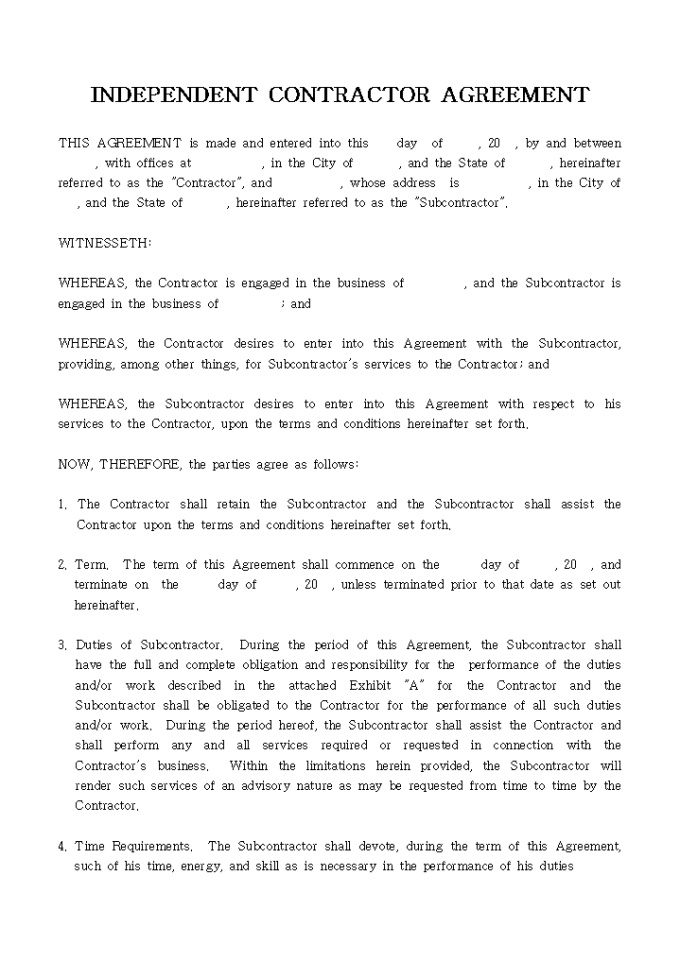 |
| Typical Contract |
I raised my hand and expressed my primary concern which has to do with the lighting allowance in most contracts. Whereas the framer, the roofer, the concrete company and the carpenter are all given blueprints and asked to quote their prices, I come to the party much later and have never had a chance to estimate what the lighting will cost. In fact, I could never provide that estimate without meeting with the client to choose specific fixtures. Prices of lighting fixtures vary greatly for lots of good reasons. The lighting allowance is therefore necessarily a “plug-in” amount.
When I said that there was no way someone building a $2,000,000 house with a lighting allowance of $5,000 (exaggeration) could possibly light that house for $5,000 they told me the truth about lighting allowances (and other allowances too).
The Truth About Lighting Allowances is contractors bid against several other contractors for every job, and if they included the REAL cost of lighting they would never get the job because the other contractors always “low ball” the allowance. The allowance is a “garbage figure”, to quote the contractor. I totally understand this thinking and I respect them for being truthful with me, but when I meet the client and tell them the real cost of lighting, there is sticker shock and disappointment. Most of the time the client tells me: “I went way over budget on my tile and I do not have any money left”. I feel their pain, I really do, but without decent lighting they will not be able to see the tile that cost so much.
Anyway, I feel exonerated. I have been telling you that the lighting allowance is NEVER adequate. Now you know why. Be aware and be prepared. Please visit us at www.fogglighting.com and like us on Facebook. Remember I am always available to design the lighting for you.