


Mar 2013
How We See Light
We do not see light directly unless we look directly at a light source. What we see is light that is reflected off a surface. If something appears brighter than something else it is because of the difference in contrast between the two objects. This is referred to as relative brightness and it is important to proper lighting design as we will discover in future postings.
|
| Driving at Night |
One of the most common examples of relative brightness is the automobile headlight. Have you ever been blinded by super bright headlights? That is because the eye’s pupil can not adjust fast enough when going from total dark to really bright. This is especially problematic for older eyes.
Reading is another example of relative brightness. Reading black type on white paper is much easier than reading navy blue type on blue paper. That is because the black/white contrast is much greater than blue/blue. Even in moonlight the contrast between black type and white paper makes reading possible.
Be sure to visit FoggLighting.com to see some really great lighting ideas. Follow me on twitter @lightingfogg.
Mar 2013
What is Light?
Light is part of the electromagnetic spectrum of energy. It is a form of energy that we can see. Light is created when an energy source emits energy in the visual spectrum which is between 380 and 780 nanometers.
 |
| Incandescence at its Best! |
Light is created in a number of ways. Incandescence is the most common way. Incandescence is burning. In an incandescent light bulb the filament is heated until it glows. This is true in the common A lamp as well as halogen and xenon light bulbs. Arc discharge is another way light is created as in fluorescent or High Intensity Discharge lamps. Arc discharge occurs when an electrical current is passed through a gas. Another relatively new way to create light is Solid State Lighting, better know as LED. Light is produced when electrical current passes through a semiconductor and light is emitted as a photon.
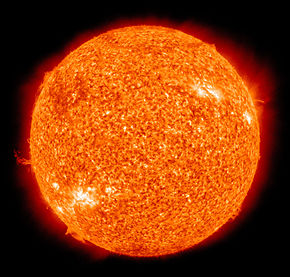
Perhaps the best example of incandescence is the sun. The sun is an example of natural light. Daylight is sunlight reflected and diffused through the atmosphere. Moonlight is sunlight reflected. There is no single type of natural light. There are even some plants that give off light directly. They are luminescent.
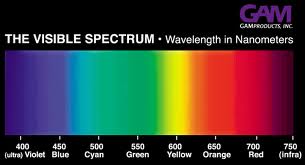
It is important to know about light, light sources and qualities of light in order to more effectively design lighting for a home. Remember, from a previous post, the color you see is in the light source. If the light source does not have a full spectrum of colors, you will not see the colors that are missing from that light source. That is why early fluorescent and LED light sources did not render colors accurately; they were missing colors in the spectrum.
Please follow me on twitter @lightingfogg and please visit my website, FoggLighting.com to see some great fixtures.
Mar 2013
Lumens, Footcandles and Candlepower
These are commonly used and sometimes misunderstood lighting terms. I will try not get too technical in explaining these terms, but these are terms with which you should be somewhat familiar.
Lumen – The quantity of light produced by a given light source. All light sources are rated in lumens. You will become more familiar with lumens because all the new light bulb packaging will have lumen information printed on it. This is part of the Government’s requirement to make consumers more energy conscious. The amount of lumens is not determined by the size of the light source. We do not actually see lumens as such. What we see are lumens reflected off a surface.
 |
| One Footcandle |
Footcandles – The measurement of how much light falls on a surface. One lumen falling on one square foot of a surface is one footcandle. A footcandle was originally determined by placing a candle a foot away from a surface and measuring the amount of light on that surface. Footcandles (FC) are the measurement used to determine the light required for different tasks. As with lumens we do not see footcandles until they are reflected off a surface.
Candlepower – The measurement of the intensity of light in a specific direction. A candela is a unit of candlepower. Candlepower is generally used to describe the light distribution of directional light bulbs like an MR16 or a PAR30. The amount of light on a surface is determined by dividing the candlepower of the light source by the distance squared (the inverse square law). The ratio is 4:1. Thus the further away the light source, the less light strikes the surface by a factor of 4.
Please visit my website, FoggLighting.com to see a great selection of lighting fixtures.
Mar 2013
Why Use a Lighting Designer
Why would you want to use a lighting designer to help you with your lighting? That is a question that you should consider if you are building or remodeling. There are several valid reasons to engage a lighting designer.
A lighting designer has been trained and has had experience in how a space should be lit. We have had experience both in the classroom and on the job. Lighting designers are familiar with all the different light sources and fixtures and can match them to the tasks being performed. Most of all, a lighting designer is working with you and for you to help you avoid making a mistake that you might regret later.
It is your home. You spend a lot of money on decorative accents, furniture, kitchen counters and bathroom tile. You deserve to have the lighting to enjoy all these features of your home. That is where a lighting designer provides a great value.
Mar 2013
Light Sources Part III – Halogen
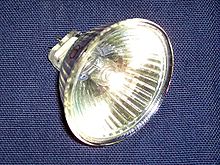
People ask me all the time about halogen light bulbs. Most of the questions are: Do they get hot? Yes they do get hot. Halogen lights bulbs are a form of incandescent lighting, and all incandescent light bulbs get hot. However halogen bulbs operate at higher temperatures because the gas inside the glass enclosure is under more pressure that regular incandescent light bulbs.
 |
| A Typical Halogen Light Bulb. |
Because the halogen gas inside the capsule is under high pressure the capsule must be made of a hard quartz glass. They are sometimes referred to as quartz halogen. You should not handle the quartz bulbs with bare hands as the oil from your skin can shorten the life of the halogen light bulb.The filament of all incandescent light bulbs is made of tungsten. Halogen light bulbs have a longer life that regular incandescent bulbs because of something called the halogen cycle. During the halogen cycle tungsten is evaporated away from the filament and combines with the halogen. Then in a chemical reaction the tungsten is deposited back onto the filament and that extends the life of the light bulb. Halogen light bulbs can be smaller in size than other incandescent light bulbs so you find them in mini pendants and other small light fixtures. They also produce a pleasant white light usually about 3000K.
|
| MR16 Halogen Directional Light Bulb. |
Another popular halogen light bulb is the MR16. They are used in many track heads, recessed lights and landscape lights. The are a “mirror reflector” light bulb hence the name MR. The number 16 is the diameter of the face of the bulb. It is a directional light bulb that focuses a beam of light onto an object or work surface. This a very useful light bulb for lighting art, kitchen counters and other applications where a directional light source is needed.
Halogen bulbs in different shapes, beam spreads and lumen output are a necessary for tool for a lighting designer’s bag of tricks. Remember always pick the light bulb first then the fixture to house it. Different light bulbs do different things. You want to match the lighting task with the proper light source. That is what I do as a lighting designer. Please visit my website, fogglighting.com.
Mar 2013
A Sunday Factoid
Lighting accounts for only 5% to 7% of the total electricity usage in the average American home.
Mar 2013
Light Sources Part II – Fluorescent & CFL
Fluorescent lighting has gotten a bad reputation over the years because lots of people associate fluorescent lighting with flicker, bad CRI and cold color temperature. All that is valid because fluorescent lighting had all those qualities a few years ago. But most of today’s higher quality fluorescent tubes and CFL’s have overcome all those problems. They use better ballasts to prevent the flicker and they use good phosphors to improve both CRI and color temperature.
Fluorescent lighting is almost as efficient as LED and it is about 4 time mores efficient than incandescent lighting. One drawback is the mercury that fluorescent light bulbs contain. Another drawback to fluorescent lighting is that it can not be dimmed as easily as LED or incandescent, but there are dimmable ballasts available for both CFL and tubular fluorescent light bulbs.
 |
| A typical CFL. |
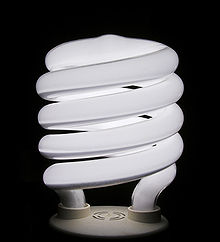
All fluorescent light bulbs are a hollow glass tube which is coated on the inside with a rare earth phosphor and filled with a gas that contains mercury. Fluorescent light bulbs have a ballast, either integral to the light bulb or enclosed in the fixture, which converts AC current to high frequency and applies that current to the glass tube. The current excites the gas in the tube which causes the phosphor coating the inside of the glass to glow. The quality of the light is directly related to the quality of the phosphor. Cheap phosphors result in poor CRI and bad color temperatures whereas more expensive phosphors produce pleasing high CRI light. There is a reason good quality is more expensive.
 |
| Pictured here are two different CFL’s and two sizes of fluorescent tubes. |
CFL’s have become more commonplace over the past few years. Some fit into regular screw-in sockets and some have dedicated sockets with different pin configurations. Most of the ones that screw in have their own ballast while the ones with the pins rely on the ballast in the fixture. More and more fixture manufacturers are producing fixtures that require the pin base because they meet the Government’s requirements for energy efficiency and also meet standards for LEED certification.
Fluorescent is a great light source and is much more affordable than LED. It is not recommended for use in exterior fixtures in cold climates because it takes a few minutes for fluorescent lights to warm up to full output on a really cold day.
Mar 2013
Honored to be Featured
Celia is owner of Celia Bedilia an interior design firm. Celia is a wonderful designer who creates beautiful spaces. We are proud to be able to work with Celia. Be sure to visit Celia’s Blog.
Please visit my website when you have a chance.
Mar 2013
Light Sources Part I – LED’s
There is a lot of buzz these days in the lighting industry about LED, technically know as Solid State Lighting. Everybody is jumping onto the LED bandwagon. I get emails everyday from manufacturers from the Far East trying to sell me their LED products. Beware, there is a lot of bad LED product in the marketplace. Conversely there is a lot of good LED product available too. Hopefully this posting will enable you to distinguish between the two.
LED is an energy efficient light source that may or may not be dimmable. Check the product information to be sure. It is a product with a long life. Manufacturers claim up to about 27 years under normal operating conditions. The light output degrades slowly over the life of the LED meaning it does not burn out all of a sudden.
An LED is a Light Emitting Diode, a simple type of semiconductor that is similar to semiconductors used in computers. It is a solid material that conducts electrical current. Light is emitted from the semiconductor die which is a chip of semiconductor material treated to create a positive-negative junction. When voltage is applied the current flows from the positive to the negative side and excess energy is emitted as a photon and heat is emitted in the form of conduction. The natural color of the photon is not white. What we see today as LED lights require the LED to be coated with different materials to give white light (as well as many other colors). LED’s are a directional light source by nature. They emit light in one direction. In order for an LED bulb to emit light like an incandescent light bulb reflectors must be used inside the LED capsule. That’s the technical stuff.
 |
| Typical LED replacement light bulb. |
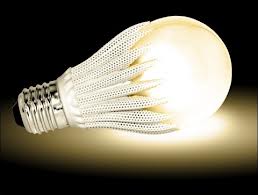
Looking at the picture to the left you will see a typical LED replacement light bulb. Notice the fins on the bottom of the bulb. They serve as the heat sink. This is probably the equivalent to a 40 watt incandescent light bulb. Inside are many individual LED chips arranged in an “array” to product sufficient light output to generate about 800 lumens. The reason you have not seen any 100 watt equivalent LED replacement bulbs is because they have not figured out how to dissipate the heat that would result in generating about 1,600 lumens. Imagine a heat sink twice the size of this one! You could not get the light bulb into the socket.
|
| Examples of directional and under cabinet LED’s. |
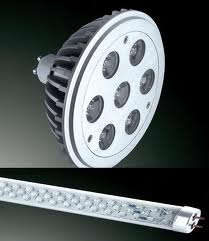
Looking at the photo to the right you will see an example of an LED replacement directional light bulb, probably replacing a PAR30. The fins on the back are the heat sink. Below that is an example of an under cabinet linear LED fixture comprised of many LED chips. They are arrayed in a linear fashion to provide a even distribution of light on a counter top. This type of linear fixture can also be used as cove or toe kick lighting. In my opinion the best residential application today for LED lighting is this type of under cabinet lighting.
There are a few things you should be aware of when considering LED lighting for your home.
First is the cost. The payback period for LED vs incandescent is between 4 to 7 years. LED technology is doubling about every 18 months following Moore’s Law. This means a couple of things for you. First, prices are sure to come down in the next few years. Second, new and better LED products are going to be available in the next few years. Imagine LED technology being like computer technology in the 1980’s. So the question is: Do you wait or do you jump in now, knowing that the product you buy today will be far surpassed in the next few years? Keep in mind that these LED’s will supposedly last for up to 27 years under normal operating conditions and hours. Conversely if everybody had waited for computer technology to improve before jumping in, the technology might have stalled. The benefits of buying LED now, like energy conservation, might outweigh the uncertainty of what future LED technology will be.
The next thing you need to be aware of is quality. There are HUGE quality differences in today’s LED products. These differences could ruin your LED lighting experience if you do not do your homework. LED’s are manufactured by lots of different companies in lots of different factories all over the world. Like everything else some factories have better quality control than others. Individual LED chips have individual properties that distinguish them from each other. Good quality control means that LED’s with the same characteristics are grouped (binned) together. This means the LED’s with the same color qualities and same lumen output should be used to make a fixture or replacement bulb. These will perform as they are rated to perform. Also as with anything else a low price might be a red flag.
Color temperature and CRI (reference my previous posting) are two of the big considerations. If you get an LED with the wrong color temperature it can feel like you are living in a parking garage. If you get one with poor CRI you will be very disappointed about how items in your home look. Maybe the drapes on your windows will look green instead of orange. Remember CRI should be in the mid-80’s and color temperature should be around 3000K for relaxing light.
Lighting in your home is a big deal. My advice would be to try LED and see how you like it before going all in, and get the best you can afford.
Please visit my website, fogglighting.com, and email me with any questions. I do not have all the answers, but I know where to get them.
Mar 2013
Some Qualities of Light That You Should Know
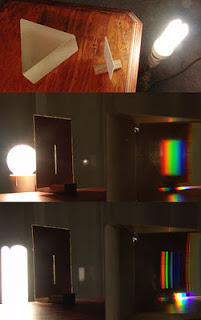
Before my first posting about light bulbs (sources of light) there are some qualities of light with which you should become familiar. Different sources of light exhibit different characteristics that influence which light bulb to use in different situations.
Color Temperature is a term that refers to the color of light, commonly expressed as warm or cool. Technically it is expressed in degrees Kelvin (K) with lower numbers being warmer than higher numbers. For example 1,700K is the color of a flame, 2,700K is the color of an incandescent light bulb, 3,000K-4,500K is the color temperature of fluorescent and LED light sources and 6,500K is the color temperature of the sun on an overcast day. For residential lighting purposes most color temperatures are compared to incandescent light.
 |
| Notice the smooth transition from red to violet for the incandescent light bulb. |
Color Rendering Index, expressed as CRI, is a measure of how good colors look. All light bulbs are compared to an incandescent light bulb which is deemed to have the best CRI. CRI is expressed by a number from 1 to 100, 100 being the CRI of an incandescent light bulb. CRI’s between 82 to 100 are judged to be satisfactory while CRI’s below 80 are not. Most of the new fluorescent light bulbs, including CFL’s, are mid 80 or higher. LED’s currently range from about 65 to 88. In the photo to the left you can see the full spectrum in the light of the incandescent light bulb earning it it’s 100 CRI rating.
As humans our eyes see color as the reflection of the color in the light source. If part of the color spectrum is missing from a light source, red for example, you will not see red. Some of the early highway lighting had such bad CRI that at an accident scene the police could not differentiate between blood and oil.
There is a lot to learn about light, how we see light, how contrast affects how we see, how glare interferes with our vision and what kind of light is best for different situations. I strongly urge you to download the Underwriters Laboratory app “Light Smart” at the App Store. It has lots of great information about lighting.
Please visit my website, FoggLighting.com.